
Becoming a parent is a new phase, and with it come many important decisions. One of the early ones is choosing the right school for your child. If you are here, you are likely exploring how to approach your child’s first school admission and what actually matters in the process.
In this blog, we will share the key points that can help clear any doubts you may have and support you in making informed decisions about your child’s admission.
Parent’s Guide to First School Admission
1) Age Criteria
Before applying for admission, it is important to check the age eligibility set by schools. In most cases, the expected age is around 2–3 years for playgroup or pre-nursery, 3+ years for nursery, and 6 years for Class 1 (as per NEP guidelines).
What many parents miss is that schools follow a cut-off date (usually March 31) to calculate age. Even a difference of a few months can affect eligibility. That is why it is important to first identify which level you are applying for, pre-school, nursery, or Class 1 ,and then check if your child meets the required criteria.
2) Admission Timeline
Understanding the admission timeline is important so you do not miss the right opportunity for your child’s admission. In most schools, admission forms are available between September and January, with the peak admission period being November to February, when schools finalise admissions.
Since good schools have limited seats, applications fill up quickly. If you are planning to apply to a preferred school, it is important to stay aware of these timelines and apply early. This helps ensure your child’s application is considered on time and improves the chances of securing admission in your preferred school.
3) Start Planning Early
Most parents begin planning their child’s admission 6–12 months in advance, as it is an important decision for their child’s future. Starting early gives you enough time to explore options, understand different schools, and make the right choice instead of rushing at the last moment.
There are several factors to consider before admission, such as the school’s location, transport options, environment, admission process, and overall fit for your child. Taking time to evaluate these properly helps you choose a school that suits your child’s needs.
If planning starts too late, especially just a few months before admissions close, there is limited time to compare and decide. This often leads to choosing the most convenient option rather than the right one for your child’s first learning experience.
4) Create a List of Schools
Choosing the right school is one of the most important steps in your child’s admission process. It is helpful to understand the different types of schools—some offer only pre-school levels, some go up to primary classes, and others continue till senior secondary. This matters because it affects whether your child will need to change schools later or can continue in the same environment.
Start by creating a list of schools based on key factors such as teaching quality, school environment, board affiliation, years of establishment, infrastructure, facilities, and academic results. These factors help you understand how each school supports learning and development.
Once you have this list, narrow it down based on what matters most for your child and your convenience, such as location and daily travel. This shortlisting helps you move to the next step.
5) Visit the School Before Finalising
Do not select a school based only on brochures or calls from the admission team. A school visit is important to understand the environment properly. Once you have shortlisted a few schools, connect with their admission or administrative team and schedule visits.
Avoid rushing through multiple visits in a short time. Plan them properly so you can observe each school carefully. During the visit, pay attention to infrastructure, classrooms, facilities, overall environment, and how the school functions. It is helpful to note down your observations so you can compare later.
After visiting all shortlisted schools, discuss your observations and finalise the best option based on what suits your child.
6) Apply to Multiple Schools
Do not depend on just one school for your child’s admission. Admission decisions are made by schools based on their own criteria, and selection is not always guaranteed.
To stay on the safer side, apply to multiple schools from your shortlisted list. Complete the admission forms and required steps for each of them within the given timeline. This ensures that even if your first preference does not work out, you still have other suitable options for your child’s admission.
Other Important Things Parents Should Know
a) What Schools Check During Admission
Along with basic eligibility, it is important to understand what schools usually observe during the admission process. This may include how you communicate and interact, whether someone from your family is already studying in the school (such as a cousin or relative), your child’s age as per eligibility, and the distance of your home from the school. Some schools also prefer students living nearby or those who have a clear transport plan if the school bus is not used.
At the student level, schools usually observe simple things such as your child’s ability to follow basic instructions, respond comfortably, and adjust when parents are not around. These are not tests, but general observations to understand readiness.
b) Document Requirements
Before applying, it is important to keep all required documents ready. Most schools ask for a birth certificate (mandatory), passport-size photographs, address proof, and parent ID proof. Some schools may also request medical or vaccination records. Having these documents prepared in advance helps avoid delays during the admission process.
c) Adjustment Period
When your child starts school for the first time, it is natural for them to feel uncomfortable, cry, or show hesitation. This is a normal reaction as they adjust to being away from parents and getting used to a new environment.
Most children take around 2–4 weeks to settle into the school routine. During this time, patience and reassurance from parents play an important role in helping the child feel secure and comfortable.
Best CBSE School in Rohtak
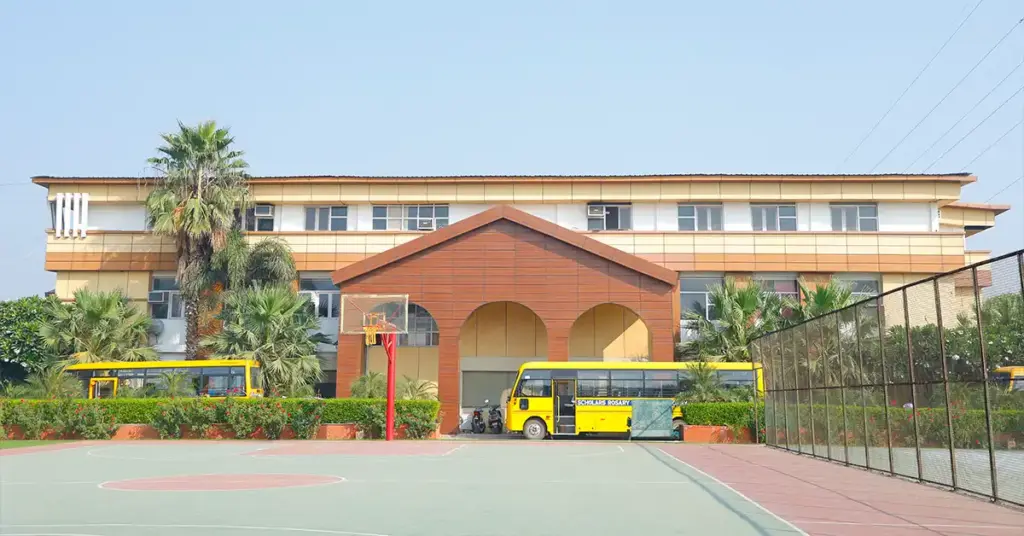
If you are a parent in Rohtak or nearby areas looking for the best CBSE school in Rohtak or a best English medium school in Rohtak, it is important to choose a school that not only provides quality education but also ensures a smooth and continuous learning journey for your child.
At Scholars Rosary, we offer a well-structured system with multiple campuses designed for different stages of learning, making it easier for your child to grow within the same school environment without unnecessary transitions.
Under the Scholars Rosary group, we have four schools in Rohtak, each designed for different stages of a child’s learning journey. This structured system makes us one of the preferred schools in Rohtak, Haryana for parents looking for both quality education and continuity:
- Blossoms School (Pre-Nursery to Class 2) – Focused on early learning, comfort, and building first school readiness.
- Preparatory School (Pre-Nursery to Class 3) – Strengthens foundational skills, communication, and confidence in the early years.
- Imperial School (Pre-Nursery to Class 5) – Builds a strong academic base and prepares students for higher classes.
- Senior Secondary School (Class 3 to Class 12) – A complete CBSE academic journey, recognised as one of the best senior secondary schools in Rohtak.
Why Parents in Rohtak Prefer Scholars Rosary

Among the many schools in Rohtak, Haryana, parents choose Scholars Rosary because of:
- Student-centric teaching that focuses on clear understanding and individual learning
- Well-designed learning facilities that support effective and engaging education
- A safe and secure campus environment that ensures student well-being
- Experienced and qualified teachers who guide students at every stage
- Reliable and secure transportation with proper safety measures
- Smart classrooms that make lessons interactive and easier to understand
- Well-equipped science laboratories that strengthen practical knowledge
- Activity-based learning that builds creativity, confidence, and communication
- A consistent academic approach from early years to senior classes
- Strong focus on fundamentals and concept clarity in every subject
- Smooth transition across schools within the same system and approach
- Structured preparation for higher classes and board examinations
Visit the Campus
If you are a parent in Rohtak looking for the best school for your child, we invite you to visit Scholars Rosary. A school visit gives you the right understanding of the environment, facilities, and overall approach. Explore the campus, interact with our team, and then make an informed decision about your child’s admission.
Conclusion
Choosing the right school for your child is an important decision, and taking the right steps at the right time makes the process much easier. From understanding age criteria and timelines to visiting schools and comparing options, each step helps you move closer to the right choice.
Every child is different, and the right school is one that supports their learning, growth, and confidence from the very beginning. Taking the time to evaluate your options carefully will ensure a strong start to your child’s educational journey.
FAQs on First School Admission for Parents
1. At what age should a child be ready for first school admission?
Most schools follow age guidelines of around 2–3 years for playgroup or pre-nursery, 3+ years for nursery, and 6 years for Class 1 (as per NEP). It is important to check the school’s cut-off date (usually March 31) to ensure your child meets the eligibility criteria.
2. What basic skills should a child have before starting school?
A child is not expected to know advanced academics before starting school. Basic readiness includes the ability to follow simple instructions, respond when spoken to, recognise their name, and stay comfortable in a new environment. Schools focus more on readiness than academic knowledge at this stage.
3. How can I prepare my child emotionally for school?
You can prepare your child by slowly building a routine, encouraging short periods away from parents, and talking positively about school. It is normal for children to feel hesitant in the beginning, but with reassurance and consistency, they adjust over time.
4. Should I teach my child reading and writing before admission?
No, it is not necessary to teach reading and writing before admission. Schools focus on developing these skills gradually. Early pressure on academics is not required; instead, focus on communication, basic understanding, and comfort in learning environments.
5. How can I improve my child’s communication skills?
Encourage regular conversation at home, ask simple questions, and let your child express their thoughts. Reading picture books, storytelling, and interactive play also help build communication skills naturally. A supportive and interactive environment makes a big difference.
6. What is usually asked in a school admission interview for kids?
There is usually no formal interview. Schools may interact with the child to observe basic responses, comfort level, and ability to follow simple instructions. It is more about understanding the child’s readiness than testing knowledge. At schools like Scholars Rosary, the focus is on making the child feel comfortable rather than assessing them academically.